A Note from Pastor Madeline

Juneteenth
Today I write directly to my white friends and I begin with some questions. What do you know about Juneteenth? How about Black Wall Street? The Tulsa Race Massacre? The Killing of Emmett Till? The Legacy Museum by the Equal Justice Initiative? The Lynching Project? The Children's Crusade of 1963? Or Freedom Summer? If you know anything about any of these difficult moments in US history, then you are way ahead of where I was even a few years ago. You see, these aren't the things we were taught in school.
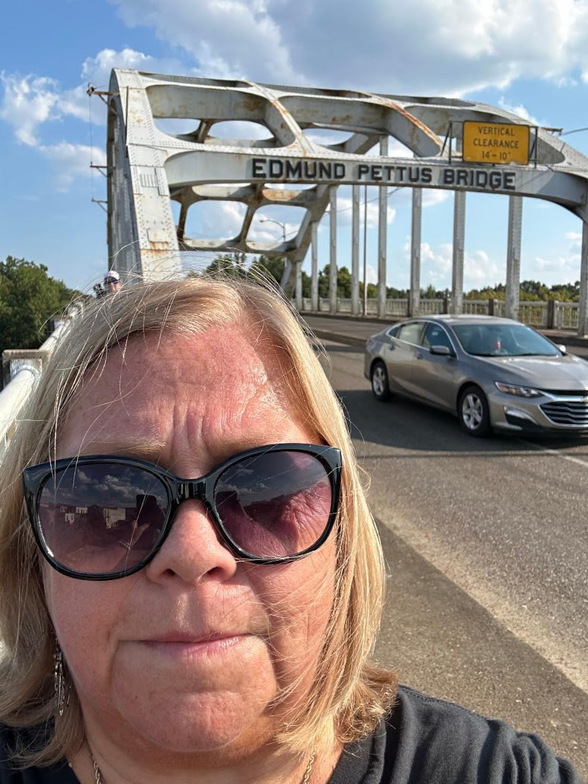
Last year, I had the incredible honor and privilege of taking part in a Civil Rights Preaching Pilgrimage to Birmingham, Montgomery, Selma and Atlanta. We visited 16th Street Baptist Church in Birmingham - where a horrific bombing by the KKK had occurred and four young girls died. We drove the route of the March from Selma to Montgomery and spoke to people who had been part of the Children's Crusade and the March itself. We visited churches that had been pastored by Rev. Fred Shuttlesworth and Rev. Dr Martin Luther King, Jr. We visited the Legacy Museum and the Lynching Memorial and we even walked across the Edmund Pettus Bridge (above). And every evening we would go back to our hotel and debrief about our experience, our remorse, and our call to prophetic preaching to share these horrific, yet important moments in history that many white people knew nothing about. We were all pastors- black and white and brown; male, female and non-binary- and we were all profoundly impacted by this experience. Many evenings we just hugged one another and wept.
Why do I share this with you today? Well, tomorrow, June 19th, is Juneteenth. A national holiday (only recognized since 2021), it commemorates the day that General Gordon Granger stood on Texas soil and read General Orders No. 3: “The people of Texas are informed that, in accordance with a proclamation from the Executive of the United States, all slaves are free.” However, this occurred more than two years after the Emancipation Proclamation which was intended to end slavery. Unfortunately, it did not work in the confederate strongholds where states simply defied the proclamation and broke the law. Why did it take our country 156 years to recognize this second independence day as a national holiday? I'll let you ruminate on that.
So, my white friends, now that we know the history of Juneteenth, how can we honor this day and what it stands for? I offer you three suggestions:
- Go back to paragraph one and research each of the black history events I referenced. Find out everything you can about them and be sure to share that knowledge with others.
- Join us tonight (Thursday, June 18th) for our Beloved Community movie night at 5:30pm in Jones Hall and watch the film The Best of Enemies, eat some pizza and stay for an important discussion after the movie.
- Join us on Friday, June Nineteenth at 9am for Key West's commemoration of Juneteenth at the African Memorial Cemetery at Higgs Beach, a site tied to 294 African men, women and children who are buried there.
Jesus' entire ministry was centered upon healing, forgiveness, and lifting up the marginalized and oppressed. On this Juneteenth I urge you to do the same by acknowledging the pain and suffering of our back siblings, celebrating their resilience and faithfulness, seeking forgiveness for our complicity in this suffering and taking action to elevate the black community that still today seeks equality and justice in a time when celebrating diversity, equity and inclusion is not only frowned upon but can make us a target of retaliation.
Let us continue to love one another and lift one another up - no matter what!
Grace and Peace
-Pastor Madeline
The Apostle Paul writes in Galatians 3:26-28:
26 So in Christ Jesus you are all children of God through faith, 27 for all of you who were baptized into Christ have clothed yourselves with Christ. 28 There is neither Jew nor Gentile, neither slave nor free, nor is there male and female, for you are all one in Christ Jesus."